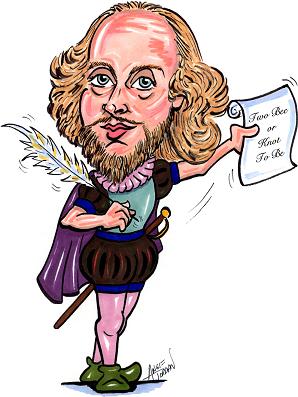
This is my 250th blog post, in just about 6 weeks since the Ides of March. It's been an eventful period in the country, among my colleagues, and in the life of my family.
My father, who is 86 and has been suffering from Alzheimer's Disease for some time, appears to be in rapid decline and very near death. I think he, and we, have come to accept that reality, and are coming to be at peace with it.
I'll be going to New Mexico for what will probably be my "goodbye visit" with him. We anticipate that he will be buried at Arlington National Cemetery, in recognition of his heroic service in WWII. He served as a combat infantry sergeant in the Battle of the Bulge and the sweep into Germany through the end of the European war, winning a Silver Star, a Bronze Star, a Purple Heart, and other commendations, as well as several battlefield promotions. After being initially rejected for service on medical grounds, he secretly sought medical attention and camouflaged his medical condition in order to serve. I'm not sure his mother, my grandmother Sadie, ever forgave him for that, but he was determined to take part in the fight against the Nazis.
Quite a difference from my generation (and myself) during the Vietnam War, or my children's generation during Iraq.
Dad would have loved to be a physician, or perhaps a teacher. His financial circumstances, and the needs of his family, did not allow for an extended period of expensive schooling. He got a degree in accounting at NYU after the war, then moved with my mother to Florida (where I and my two younger siblings were born), becoming a CPA and a partner in a local accounting firm in Miami. That firm eventually merged into a national firm. I don't think he liked the work very much, or found any great satisfaction in it, but it provided a living for his family, and allowed him to feel he was meeting his responsibilities. He had resources of strength, caring, and gentleness that he could not express very fully as an accountant. He was a highly responsible and dutiful man, probably to a fault. I've had to cope with that complicated inheritance in my own life, as have my siblings (and my children).
He has been a devoted husband (to my mother Ruth) and father to my brother Marshall (who has borne the primary burden of Dad's care in recent years), sister Cheryl, and myself (and wonderful, loving father-in-law to Phyllis). He enjoyed life, sports (particularly golf) and being with people. It is very sad that his final years, compromised by illness, have been so isolated, limited and lacking in interest to him.
We had some good times and some bad times over the years. He was the eldest son in his family (as am I), and had a difficult, and not very rewarding, relationship with his own father. He wanted a better relationship with his children. That was sometimes difficult to achieve in practice, probably particularly with me. He had a considerable temper and could be stubborn (as can I), and that did not always bring out the best in me. Visits could be tempestuous, particularly as leave-taking neared, and that made visits less frequent than might otherwise have been, even before our respective health problems made travel difficult. I don't think he understood my academic or intellectual aspirations all that well, or the depth of my Jewish religious commitments, or my perfectionism. He had a hard time reading my academic writing, or appreciating the issues that excited and stimulated me, and that could be hard for me at times. He was forged by depression and war, and his focus was on more basic needs and responsibilities.
He has been a good and generous and loving father, and we have come to some peace in our relationship. I have found comfort in helping to care for him on those occasions that we have been together in recent years.
During my college years and for a while after, the family lived in a house with a small dock overlooking Indian Creek in Miami Beach, a few blocks from the ocean. It was a peaceful and beautiful spot, coincidentally within eyeshot of the hospital where I was born. Dad and I would go out on the dock during the evening and talk, sometimes for hours, enjoying the gentle breeze and soothing sounds of the water lapping against the dock. Those were our happiest times together, and I'll try to hold that image as I confront his shriveled, dying body, and contemplate a future without him.
I love him and will miss him terribly.
The blog will be down during my impending travels.
Friday, April 27, 2007


First Jewish group set up within a German political party
From EJP :
Since my visit to Central and Eastern Europe last year, I have had a considerable interest in the nature and quality of what remains of Jewish (particularly religiously or culturally identifying but non-Orthodox) life in Berlin and Prague in particular, and Germany, Austria, the Czech Republic and Hungary, and the former Soviet Union more generally. I'll try to include such reports as I find in future blog posts. Maybe I'll eventually get around to writing up some of my impressions from that trip and posting some photos as well.
BERLIN (EJP)---A new Jewish group has been set up within Germany’s centre-left Social Democratic Party (SPD), the first such organisation within a major German party since the Nazi takeover in 1933.
The “Caucus of Jewish Social Democrats” was founded by Peter Feldmann, a Frankfurt city councilor and by Berlin law professor Sergey Lagodinsky, and others, the Frankfurter Allgemeine Zeitung daily newspaper said.
The newspaper quoted Feldmann saying after a meeting in Berlin with Social Democratic leaders, 'the SPD welcomed us with open arms.'
Since my visit to Central and Eastern Europe last year, I have had a considerable interest in the nature and quality of what remains of Jewish (particularly religiously or culturally identifying but non-Orthodox) life in Berlin and Prague in particular, and Germany, Austria, the Czech Republic and Hungary, and the former Soviet Union more generally. I'll try to include such reports as I find in future blog posts. Maybe I'll eventually get around to writing up some of my impressions from that trip and posting some photos as well.
Christopher Hitchens' God Is Not Great
Exclusive excerpts From Slate Magazine
Slate is running excerpts from Hitchens' atheist manifesto.
Whatever else one can say, the guy is quite a polemicist! This stuff is not likely to put anyone to sleep.
Slate is running excerpts from Hitchens' atheist manifesto.
Whatever else one can say, the guy is quite a polemicist! This stuff is not likely to put anyone to sleep.
A ‘First Spouse’ in France? Not Any Time Soon
From The New York Times
By ELAINE SCIOLINO
Pretty fascinating commentary on the differences in political culture in the two societies.
I've mostly tended to think America's over-fascination with the personalities and family lives of our Presidents (and Presidential candidates), relative to their ideas and political competence, reflected our barely sublimated desire for a royal family. I was one of the very, very few who thought discussion of a Reagan-Ford ticket for President and Prime Minister (was that 1976?) was sort of interesting (structurally, not in terms of those particular leaders, neither of whom commanded my respect or admiration at the time). I'm still inclined to think a very large share of abiding American affection for Reagan reflects more on his royal/grandfatherly image than on his policies.
The French example complicates that simple explanation. But maybe the French are more interested in casting a cinematic bedroom farce than a government. It still beats whatever we have done the past two elections.
By ELAINE SCIOLINO
PARIS, April 26 — No matter who wins the presidency of France on May 6, life in the grand, presidential Élysée Palace is destined to change.
Pretty fascinating commentary on the differences in political culture in the two societies.
I've mostly tended to think America's over-fascination with the personalities and family lives of our Presidents (and Presidential candidates), relative to their ideas and political competence, reflected our barely sublimated desire for a royal family. I was one of the very, very few who thought discussion of a Reagan-Ford ticket for President and Prime Minister (was that 1976?) was sort of interesting (structurally, not in terms of those particular leaders, neither of whom commanded my respect or admiration at the time). I'm still inclined to think a very large share of abiding American affection for Reagan reflects more on his royal/grandfatherly image than on his policies.
The French example complicates that simple explanation. But maybe the French are more interested in casting a cinematic bedroom farce than a government. It still beats whatever we have done the past two elections.
Paul Begala on David Broder
David Broder Is a Gasbag | From The Huffington Post:
Begala should hardly be regarded as a neutral source. And there was a time--about three decades (or more) ago--that I enjoyed Broder as a commentator on American politics. That was a long time ago, and my perceptions were less jaundiced by life experience.
Sucking up to power is, of course, a much wider phenomenon, among Washington journalists and far beyond.
No, none of this raises Dean [of the Washington Press Corps David] Broder's hackles.
He reserves his vitriol for Harry Reid.
Why Reid? Because Reid has been one of the few politicians with the courage to speak the plain, unvarnished truth to power, and the hallmark of Mr. Broder's career has been to suck up to power. Reid calls Bush a liar. Broder can't handle the truth.
Begala should hardly be regarded as a neutral source. And there was a time--about three decades (or more) ago--that I enjoyed Broder as a commentator on American politics. That was a long time ago, and my perceptions were less jaundiced by life experience.
Sucking up to power is, of course, a much wider phenomenon, among Washington journalists and far beyond.
Mental-Health Lawyers Caution Colleges Against Disciplining Students for Emotional Difficulties
From The Chronicle: :
College administrators should be careful not to discriminate against troubled students in response to Seung-Hui Cho's shooting rampage at Virginia Tech, psychologists and lawyers said at a news briefing on Thursday.
Violent behavior is rare among people with mental illness, said Robert Bernstein, a psychologist and executive director of the Judge David L. Bazelon Center for Mental Health Law, which sponsored the briefing. Students should feel comfortable seeking counseling without worrying that their colleges will discipline them, said Karen A. Bower, a senior staff lawyer for the center.
Colleges' various policies on students' mental health show that the institutions are just beginning to navigate that terrain, Mr. Burnim said. The Bazelon Center plans to release soon a model policy that would encourage students to seek treatment and ensure that any disciplinary action is based on dangerousness and not discrimination, said Ms. Bower.
A ringing call for less civility, more vigorous argument?
My wife is an academic librarian, much involved in web discourse (and generally conflict-averse). Wonder what she will think of this piece?
From Inside Higher Ed:
Good at Reviewing Books But Not Each Other
By Steven J. Bell
From Inside Higher Ed:
Good at Reviewing Books But Not Each Other
By Steven J. Bell
Perhaps what the library profession needs to do, if it wants to be taken seriously as a science, is to realize that we need to be accepting of rigorous discourse. We need to learn that there’s something special about it, and that we do a disservice to ourselves and our profession when we fail to do all we can to encourage it. Despite the chill factor that has descended on the library profession there may be some hope. We need to look at how other disciplines stimulate and support discourse. At our conferences and through online communities we need to engage in discussions about how to encourage discourse and appropriate ways in which to engage. We need to hear from scholars in other disciplines with experience in discourse so that we can better understand how to inspire ourselves and our colleagues to be both constructively critical and accepting of criticism. We need to focus on the content, and resist the temptation to make it about personalities.
Thursday, April 26, 2007
Fair use in scholarly publishing
Wiley-VCH, one of the increasingly few cartels left standing in the scholarly publishing business, has threatened a lawsuit against a neuroscientist blogger who reproduced a small clip of a chart from an article about fruit antioxidants, in a blog about the research. See her story:
http://scienceblogs.com/retrospectacle/2007/04/when_fair_use_isnt_fair_1.php
Not only are the corporate lawyers trying to suppress fair use, and thereby suppressing serious discussion of this article, but if they are successful it would suppress publicity for articles in Wiley journals -- a result that authors and editors surely don't want, and the publisher, if it had any sense, wouldn't want -- but it doesn't appear from this episode that Wiley execs have any sense. An example of the stupidity of letting corporate lawyers determine policy.
Shame on Wiley!!
Bob Michaelson
Northwestern University Library, Evanston, Illinois 60208
rmichael@northwestern.edu
Not so clear to me that this is, in fact, an example of letting
corporate lawyers determine policy. Mostly, corporate lawyers give advice; they do not directly determine policy. The decisionmakers are the corporate executives--or should be (spoken as a lawyer, who recognizes lawyers can sometimes be asses)--and responsibility properly rests ultimately with them. (Lawyers are not excused from responsibility, but their role is different, mostly.)
My understanding is that there have been further developments on this story, and that Wiley has granted permission for reproducing the excerpts (blaming lower downs, not higher ups), without necessarily conceding the fair use issue. I'm not following closely enough for detailed comment here, but check further before taking action in response to Michaelson's posting.
Jerusalem: Vision for a place of peace
By Alice Shalvi*
JERUSALEM - Jerusalem is holy to three major monotheistic religions -- Judaism, Christianity and Islam. Therein lies its unique glory. Therein lies its tragedy. For well over a millennium Jerusalem has been a battleground, the scene of wars and terrible bloodshed inspired primarily by religious fervour, to which, in more recent times, has been added the single-minded ardour of nationalist aspiration. The city's numerous shrines, erected by Jews, Christians and Muslims, have in turn been desecrated and/or destroyed by adherents to rival faiths.
To many, the situation seems hopeless. Yet it may be precisely in the sanctity of the city in the theology of the different religions that a solution to the conflict could be found. Its origin lies in the city's geography as this has developed over the centuries and particularly during the long period of Ottoman rule, from 1517 to 1917, during which both the Jewish and Muslim communities grew and were active, separate but (almost) equal. By the time the British arrived in 1917 the city was a conglomerate of districts or neighbourhoods, each with its distinctive character and most of them with a fairly, but not totally, homogeneous population. In the Old City, these included the Jewish Quarter, the Armenian Quarter, the Christian Quarter, the Muslim Quarter, a small Moorish Quarter and so on. Outside the Old City walls were, inter alia, a German Colony built by the Templars, a Greek Colony, an Italian Colony, an American Colony. The Jews spread out to the west and south; the Arabs to the north and east of the Old City. There are at present virtually no neighbourhoods with a mixed population of Arabs and Jews. Every district has its own churches, mosques or synagogues.
When the British mandatory authorities appointed a municipal council, they (rightly) based representation on religious identity -- two Muslims, two Christians, two Jews. Later this became an elected body, to which each of twelve constituencies, six Arab and six Jewish, each elected one counsellor. The guiding principle of this mode of government was the "conscious alignment of people's nationalities with specific areas" of the city.
In November 1947, when the United Nations proposed a two-state partition of Palestine, it excluded Jerusalem from the division of the territory. Instead, it recommended that Jerusalem be a corpus separatum under UN auspices.
A combination of the UN proposal with the British model of municipal government could create a solution to the problem of Jerusalem -- a solution which, if accepted and implemented in a spirit of mutual tolerance and goodwill, with full respect for the beliefs of "the other" and a readiness to forgo exclusive sovereignty in favour of constructive collaboration, might finally put an end to the enduring conflict. But this "separate entity" should not be under UN trusteeship, any more than the Vatican is. In fact, the Vatican's autonomy, its sovereign status, could well be our model.
Jerusalem is still composed of neighbourhoods that are fairly homogeneous in terms of ethnic origin and background, countries of origin and religious practice. It would not be difficult to establish twelve or more constituencies, each of which would be autonomous and responsible for certain aspects of the lives of its residents. Each of the neighbourhoods or "boroughs" would send elected representatives to a central municipal council, which would be responsible for all matters relating to the city as a whole (transportation, town planning, sanitation, municipal parks, etc.). Separateness need not result in alienation; equality can produce fruitful cooperation and collaboration.
All this applies to Greater Jerusalem. The Old City requires a solution of its own and that could well be found in an in parvo version of the neighbourhood council, one based on equal representation of each and every one of the religious denominations that reside within its walls, who would join together to propose a just distribution of space and to determine the times of day, of the week, of the year when each of the holy places would be accessible to each of the various religions and sects that at present lay exclusive claim to the holy sites of their respective faiths. A Jerusalem Inter-Religious Council would be mandated to determine such a modus vivendi and, thereafter, with ensuring its observance by all concerned.
Some kind of external moderating mediation may be necessary to ensure fair play and equity; but that is a far cry from the internationalisation proposed in 1947. Jerusalem should be autonomous, self-regulatory, self-governing, with no outside intervention by religious authorities outside the city. Not the functionaries of the various religions, but the common folk, the practitioners, should be in charge. This would also give a voice to women, who are currently silenced in virtually all of the religions. Jerusalemites and only Jerusalemites must develop their own separate peace. They must fully internalise the truth of W. H. Auden's famous imperative "We must love one another or die."
* Alice Shalvi is a feminist and social activist who has lived in Jerusalem since 1949. This article is distributed by the Common Ground News Service (CGNews) and can be accessed at www.commongroundnews.org.
Source: Common Ground News Service (CGNews), 26 April 2007 Copyright permission is granted for publication.
Obama to Israel: Status quo failing
From Virtual Jerusalem:
Democratic presidential contender Barack Obama said Tuesday that America needs to ask Israel to help change the status quo in its conflict with the Palestinians, the only candidate at a National Jewish Democratic Council conference to suggest that there is any onus on the Jewish state when it comes to making peace with its neighbors.
'The United States government and an Obama presidency cannot ask Israel to take risks with respect to its security,' he told the crowd of Democratic activists and campaign contributors. 'But it can ask Israel to say that it is still possible for us to allow more than just this status quo of fear, terror, division. That can't be our long-term aspiration.'
Freshman senator Barack Obama's appeal to change the status quo of American politics has propelled him into the top tier of Democratic presidential contenders, and he evinced the same optimism on the intractable Israeli-Palestinian issue.
It's important to be 'hard-headed and clear-eyed about the dangers' in the Middle East, Obama said.
'We also have to recognize that the status quo is not inevitable, that we can aspire to something greater,' he continued, 'we should want to have that difficult, tough discussion...about how we're going to arrive at what I think everybody wants, which is two states living side by side in peace and security.'
The audience applauded his words...
Circuits: Is It Time for An Online Code of Conduct?
From NYTimes David Pogue Blog
...Anyway, Tim O'Reilly, the publisher of her computer books (and mine, by the way), responded with a proposal on his own blog: a voluntary, seven-step blogger code of conduct. You can read the full draft here.[O'Reilly Radar: Call for a Blogger's Code of Conduct]
There's room for argument over some of his points -- true to form, most bloggers' first reaction was to criticize it -- but one point, I think, is unassailable:
"3. Consider eliminating anonymous comments."
That's it, baby. People don't go to psychotic extremes when their names or e-mail addresses are visible.
Just look at the reviews for books and products on Amazon.com. They prove that it's perfectly possible to express dislike of something without spewing hatred. And if you've signed your name, you're a *heck* of a lot less likely to do that.
For the record, my assistant and I moderate the comments on my own blog. Criticism, snarkiness and anti-Pogue comments are all permitted. The only things we delete are off-topic political diatribes, vulgar language, and spam. Yes, spam; you have no idea how many spammers seem to think that a tech blog is the place to find customers for Cialis and Viagra.
(OK, Amazon deletes vulgar and abusive comments, too. But I'll bet that it amounts to only a small percentage of submissions, just as we delete only about 1 in 1,000 Pogue's Posts comments for offensiveness.)
The quality of the discussion at nytimes.com/pogue is very, very high, as a number of readers have noted with delight. I think the biggest reason is that on this blog, readers don't feel anonymous. Your comment is posted under a nickname, but you're nonetheless aware that we know who you are; after all, you've signed up for free nytimes.com registration. Plenty of Pogue's Post readers even use their real names as their nicknames.
And why not? If you're proud of your thoughts, why would you be afraid to be associated with them?
Yes, I know, there are exceptions; certain blog topics have good reasons for offering anonymity (spouse-abuse forums, HIV sites and so on). I'm not suggesting that *all* blogs eliminate anonymity.
Nor am I suggesting censorship. As Tim O'Reilly put it: "I'm not suggesting that every blog will want to delete such comments, but I am suggesting that blogs that do want to keep the level of dialog at a higher level not be censured for doing so.
"There are many real-world analogies. Shock radio hosts encourage abusive callers; a mainstream talk radio show like NPR's Talk of the Nation wouldn't hesitate to cut someone off who started spewing hatred and abuse. Frat parties might encourage drunken lewdness, but a party at a tech conference would not. Setting standards for acceptable behavior in a forum you control is conducive to free speech, not damaging to it."
I'm just observing that the blogs with the best and most intelligent discussion are the ones where postings aren't anonymous -- and vice versa. Over and over again, the sites that permit anonymous pot shots are the ones that seem populated solely by [bad stuff].
A partial reading of Brooks on Barack Obama
Obama, Gospel and Verse - From The New York Times:
“I take away [from Niebuhr],” Obama answered in a rush of words, “the compelling idea that there’s serious evil in the world, and hardship and pain. And we should be humble and modest in our belief we can eliminate those things. But we shouldn’t use that as an excuse for cynicism and inaction. I take away ... the sense we have to make these efforts knowing they are hard, and not swinging from naïve idealism to bitter realism.”
...Finally, more than any other major candidate, he has a tendency to see the world in post-national terms. Whereas President Bush sees the war against radical Islam as the organizing conflict of our time, Obama sees radical extremism as one problem on a checklist of many others: global poverty, nuclear proliferation, global warming. When I asked him to articulate the central doctrine of his foreign policy, he said, “The single objective of keeping America safe is best served when people in other nations are secure and feel invested.”
Remembering I.F. Stone: OSHA Leaves Worker Safety in Hands of Industry
From The New York Times: By STEPHEN LABATON
...That response reflects OSHA’s practices under the Bush administration, which vowed to limit new rules and roll back what it considered cumbersome regulations that imposed unnecessary costs on businesses and consumers. Across Washington, political appointees — often former officials of the industries they now oversee — have eased regulations or weakened enforcement of rules on issues like driving hours for truckers, logging in forests and corporate mergers.
Since George W. Bush became president, OSHA has issued the fewest significant standards in its history, public health experts say. It has imposed only one major safety rule. The only significant health standard it issued was ordered by a federal court.
The agency has killed dozens of existing and proposed regulations and delayed adopting others. For example, OSHA has repeatedly identified silica dust, which can cause lung cancer, and construction site noise as health hazards that warrant new safeguards for nearly three million workers, but it has yet to require them.
“The people at OSHA have no interest in running a regulatory agency,” said Dr. David Michaels, an occupational health expert at George Washington University who has written extensively about workplace safety. “If they ever knew how to issue regulations, they’ve forgotten. The concern about protecting workers has gone out the window.”
Andy Borowitz on Rich Little
As part of a bold new strategy to confuse the enemy, the Pentagon announced today that it was sending comedian/impressionist Rich Little to Iraq to entertain the insurgents....
... after seeing Mr. Little perform at the White House Correspondents’ Dinner Saturday night in Washington, the Pentagon decided that Mr. Little was just the man for the job, and “Operation Little Entertainment” was born.
Said one Pentagon planner, “If Rich Little can quiet down Iraq the way he silenced that room Saturday night, we’ll consider this mission a big success.”...
“I have had enough,” pleaded insurgent Hassan El-Medfaii, who attended Mr. Little’s show. “Please make the bombing stop.”
Supreme Confusion : Interesting for its source
I am no great fan of Reagan Solicitor General Charles Fried, and disagree with him on virtually all controversial matters of public consequence. Fried strongly supported the nominations of Justices Roberts and Alito. Which makes his comments here interesting:
From The New York Times: By Charles Fried
From The New York Times: By Charles Fried
Justice Anthony Kennedy’s decision for the court in the abortion case last week does not change my mind, because the procedure that was banned, intact dilation and extraction, is too rarely used and its importance too dubious to make much difference.
Still, this most recent decision is disturbing, because in 2000, in a similar case, the Supreme Court struck down a Kansas partial birth abortion ban. The Kansas law was unacceptably vague, but the principal reason for the court’s earlier decision was that there was responsible medical opinion that sometimes the procedure was less risky for the mother, and therefore in such cases the ban posed an undue burden. The federal ban cured the vagueness, but sought to overcome the medical testimony by a legislative proclamation of a fact that is not a fact: that the procedure was never safer for the mother.
The decision is disturbing because the court has on numerous occasions refused to allow Congress to overturn constitutional law by bogus fact finding, notably in decisions invalidating the Violence Against Women Act (which Justice Kennedy joined) and the Religious Freedom Restoration Act (which Justice Kennedy wrote).
It’s disturbing because Justice Kennedy fails to come to grips with his own jurisprudence, going so far as to say that because Congress was acting under its power to regulate interstate commerce, it needed only a rational basis to justify its decision. Where a fundamental right is involved, such an explanation is evidently wrong.
These Are The Final Days
The Blog | Marty Kaplan: From The Huffington Post:
It's hard to overstate the awesome discretionary power that the press has in framing a story. Deciding what to cover, and how much play to give it, and how much context to provide, and what headlines and terms to use: for reporters, producers, and editors, these are Prospero's staff. A reporter can let Matt Drudge (and thus movement conservatives) set the media agenda (as ABC News's Mark Halperin happily acknowledged), or he can let his own instincts, and shoe-leather, define what's news (as did the Boston Globe's Charlie Savage's Pulitzer-winning reporting on Bush's Congress-nullifying signing statements). A reporter can be a conduit for Republican smears (The New York Times's Adam Nagourney retailing the Edwards-as-'Breck Girl' meme), Republican lies (the Times's Judy Miller doing Scooter Libby's WMD dirtywork). and Republican Luntzism (The Politico's editor-in-chief John F. Harris alleging that Democrats themselves -- rather than the RNC -- were calling an Iraq withdrawal a 'slow bleed' strategy). Or they can do what Murray Waas and Josh Marshall do, and what Bill Moyers and David Brancaccio do, and what the reporters in Knight Ridder's (now McClatchy's) Washington bureau do, and behave like journalists, not courtiers.
Is Alberto Gonzales Stupid? : A more respectful view...
Alex Gibney: From The Huffington Post:
Gonzales is the consummate bureaucrat. With the moral direction of a cockroach, he skitters around in the footnotes of the law, avoiding fundamental principles, in an effort to survive. Let's remember: this is the man who told Arlen Specter that there was no affirmative right to habeas corpus in the Constitution, only a prohibition against its suspension. Let's admit: that's technically correct and meaningless. His brilliance comes in his extraordinary ability to remain determined, unflappable, and dilatory in the face of withering criticism. There's no smoking gun with Alberto; in fact, by intention, there's no there there. And that's how he eludes being stampeded out of the government.
This is the lawyer, formerly employed by Enron, who hid Bush's DUI conviction and prepared 57 death-penalty memoranda - all urging death and many ignoring clear evidence for clemency - for Bush's virtual assembly line of executions... This is the man who, as counsel to the President, advised his client how to commit a crime against humanity: torture. Yet, even knowing that, he managed to keep his head down in the midst of evasions and obfuscations long enough to be confirmed the leading law enforcement official of the United States. Once installed, he appears to have been far less interested in serving the Constitution - his real job - than his political bosses. In doing so, he has corrupted the rule of law and, through his belief in executive power, traded the principles of the Magna Carta for Machiavelli's The Prince, a handbook for maintaining power and justifying evil actions if they serve a just purpose.
Tuesday, April 24, 2007
One small step for humankind
The Chronicle of Higher Education: "Harvard Economist Is First Woman to Win Prestigious John Bates Clark Medal
By DAVID GLENN
Can someone help me with an appropriate Larry Summers joke to insert here?
By DAVID GLENN
The John Bates Clark Medal, which is awarded every two years to a promising economist under the age of 40, has been given, for the first time, to a woman: Susan C. Athey, a professor of economics at Harvard University. The American Economic Association announced the award on Friday.
Ms. Athey -- who was described by one of her graduate advisers as 'Superwoman' in a 1995 New York Times profile -- joined Harvard last summer, after five years on the faculty at Stanford University. She has done theoretical and practical research in a variety of arenas, including monetary policy and the structure of auctions.
Can someone help me with an appropriate Larry Summers joke to insert here?
On the Living Wage front@Stanford University
From Inside Higher Ed:
Students at Stanford University ended a hunger strike — which some of them had been on for more than a week — after the institution agreed to improvements in its treatment of some employees. The Stanford Labor Action Coalition is hailing the agreement as a major advance. The university pledged to apply its “living wage” policy to employees who had previously been excluded and to try whenever possible to work with contracting agencies that meet high labor standards.
Bill Moyers Journal: Buying the War
We just lost, in David Halberstam, one of the great reporters of his generation.
Another of that small company, a national treasure, is Bill Moyers.
This week Moyers takes on the failures of the mainstream American press in the leadup to the Iraq War. (Would that we had more young Halberstams on that job.)
Don't miss it.
David Halberstam, 73, Reporter and Author
From The New York Times:
By CLYDE HABERMAN
By CLYDE HABERMAN
David Halberstam, a Pulitzer Prize-winning journalist and tireless author of books on topics as varied as America’s military failings in Vietnam, the deaths of firefighters at the World Trade Center and the high-pressure world of professional basketball, was killed yesterday in a car crash south of San Francisco. He was 73, and lived in Manhattan....
His reporting, along with that of several colleagues, left little doubt that a corrupt South Vietnamese government supported by the United States was no match for Communist guerrillas and their North Vietnamese allies. His dispatches infuriated American military commanders and policy makers in Washington, but they accurately reflected the realities on the ground.
For that work, Mr. Halberstam shared a Pulitzer Prize in 1964. Eight years later, after leaving The Times, he chronicled what went wrong in Vietnam — how able and dedicated men propelled the United States into a war later deemed unwinnable — in a book whose title entered the language: “The Best and the Brightest.”...
President John F. Kennedy was so incensed by Mr. Halberstam’s war coverage that he strongly suggested to The Times’s publisher, Arthur Ochs Sulzberger, that the reporter be replaced. Mr. Sulzberger replied that Mr. Halberstam would stay where he was. He even had the reporter cancel a scheduled vacation so that no one would get the wrong idea.
Freedom to Discuss Virginia Tech?
From Inside Higher Ed: :
From a blog posting in response (note that quotes were not made in specific response to this particular controversy):
Emmanuel College last week urged all professors to talk to students about the tragic shootings at Virginia Tech. One adjunct who did so for about 10 minutes — but not in the way Emmanuel envisioned — was promptly fired and barred from the campus.
Nicholas Winset and his supporters see his dismissal as a violation of academic freedom and an example of the way colleges may overreact to a nationally traumatic event. Winset also says that key details about his class discussion provide context that has been lacking in some initial reports on the incident. He has posted a detailed discussion of the class that got him fired ...
From a blog posting in response (note that quotes were not made in specific response to this particular controversy):
"What in the Hell is going on Emmanuel College. Civility? ... CIVILITY??? ... on a college campus? About that Guido Calabresi, former Dean of the Yale Law School, once said, “It was tasteless, even disgusting, but that’s beside the point. Free expression is more important than civility in a university.”
And in “The Community of Scholars,” my old friend Paul Goodman said, “It is my thesis that the agent of this clinch is administration and the administrative mentality among teachers and even the students. It is the genius of administration to enforce a false harmony in situations that should be rife with conflict.
At Least the Boss Was Satisfied by Gonzales’s (non-)Answers
From The New York Times:
Having assiduously watched both Stewart and Colbert last night, I have concluded this statement by W is simply beyond parody.
WASHINGTON, April 23 — President Bush said Monday that the Congressional testimony of Attorney General Alberto R. Gonzales last week, roundly panned by members of both parties, had “increased my confidence in his ability to do the job.”
Speaking during a short question-and-answer session in the Oval Office, Mr. Bush said of Mr. Gonzales’s performance before the Senate Judiciary Committee, “The attorney general went up and gave a very candid assessment, and answered every question he could possibly answer, honestly answer.
Having assiduously watched both Stewart and Colbert last night, I have concluded this statement by W is simply beyond parody.
The lame, the tame, laying the blame
War Room - Salon.com: Not exactly Stephen Colbert
Little's routine, a time capsule of social irrelevance from the 1970s, showed considerable freezer burn. So did too many of the honchos in attendance.
Lame is about the kindest term one could apply to his, uh, performance.
Less kind: it set a bar even Alberto Gonzales might be able to meet. If he could recall where it was. Or one could, perhaps, go the other way, with Little replacing Gonzales--at least Little can remember, and poses no threat of disruptive original thought.
Rich Little, impersonating former President and peanut farmer Jimmy Carter at this weekend's sanitized-for-your-protection White House Correspondents' Association dinner: 'I had the biggest nuts in the country.'
By all reports, Little, enlisted as an offend-nobody follow-up to Colbert, failed deeply at being funny. The good news: George W. Bush didn't even try. While the president has, in the past, thought the war in Iraq to be the source of high hilarity for a dinner like this one, he said that last week's tragedy at Virginia Tech left him thinking that humor wasn't appropriate this time around.
Little apparently agreed.
Little's routine, a time capsule of social irrelevance from the 1970s, showed considerable freezer burn. So did too many of the honchos in attendance.
Lame is about the kindest term one could apply to his, uh, performance.
Less kind: it set a bar even Alberto Gonzales might be able to meet. If he could recall where it was. Or one could, perhaps, go the other way, with Little replacing Gonzales--at least Little can remember, and poses no threat of disruptive original thought.
Rabbis for Human Rights: Study Text on Israel's Declaration of Independence
:
MASECHET HA’ATZMAUT/INDEPENDENCE TRACTATE
A Talmudic style commentary on Israel’s Declaration of Independence, created by Rabbis for Human Rights in Israel.
Some Questions to Consider:
This study text is a small excerpt from Masechet Haatzmaut, a Talmudic style commentary on Israel’s Declaration of Independence, created by Rabbis for Human Rights in Israel. We plan to translate it into English.
To support this project and the work of Rabbis for Human Rights, you may send contributions to Rabbis for Human Rights, Box 1539, West Tisbury, MA 02575 or contribute online by visiting our website at www.rhr-na.org.
MASECHET HA’ATZMAUT/INDEPENDENCE TRACTATE
A Talmudic style commentary on Israel’s Declaration of Independence, created by Rabbis for Human Rights in Israel.
Some Questions to Consider:
How did the founders of Israel envision the State of Israel?
What were the Jewish sources that inspired their vision?
How did they envision incorporating their goals of Jewish state and of a state that offers equal treatment to all the citizens?
The term democratic state was included in a draft of the Declaration. Why was it omitted from the final text?
Can a state be both Jewish and democratic?
How does their vision resonate with your own vision of Israel? In what way has this vision been fulfilled in Israel?
How can we help Israel to fulfill this vision?"
This study text is a small excerpt from Masechet Haatzmaut, a Talmudic style commentary on Israel’s Declaration of Independence, created by Rabbis for Human Rights in Israel. We plan to translate it into English.
To support this project and the work of Rabbis for Human Rights, you may send contributions to Rabbis for Human Rights, Box 1539, West Tisbury, MA 02575 or contribute online by visiting our website at www.rhr-na.org.
Leonard Fein on The Anniversary of Israel’s Independence
From Peace Now:
This is the 59th anniversary of Israel’s independence. May the celebration of the 60th be attended by growing recognition, not only on both sides but also by all those who have in despair given up caring or who in anger have chosen to be deaf to the Other, the Jewish Other or the Palestinian Arab other, by all those who believe in the squaring of circles and fantasize that in a one-state solution two sets of rights that have come to be seen as mutually exclusive can be accommodated, that two states for two people is the only respectful way of getting past the current sorrow, the ongoing distortion, the death and the dying of dreams and of people.
Reflections on Israeli Independence Day
Do we even need a state? - Haaretz :
In addition to the private home and the spaces of education, society, locale, time, ceremonies and culture, there also exists another public space of great value in the formation of identity: the political-government space. Here the state not only has a role, but is the sole player. This space did not exist for the Jews during 2,000 years of exile nor is it available today in the liberal Western countries.
On the 5th of the Hebrew month of Iyar in 1948, a rare window of opportunity opened in the history of the Jewish nation for realizing its unique identity in all possible contexts, including government. The challenge is great and touches upon all the organs of the state: How is a Jewish army different from other armies? Will it stand out for its morality? Can we learn something from Jewish culture that will enable us to cope with the use of force? What unique tikkun olam, 'repair of the world,' can be achieved by a legal system in a Jewish state? Will the social security that the State of Israel gives its citizens be influenced by our tradition of charity? And how will our heritage be realized in the state justice that will be shaped by the laws of an Israeli parliament? How will 'you were a stranger in the land of Egypt' influence our attitude toward the minorities in our midst? Will the Jewish discourse of obligations and communal solidarity moderate the fever of privatization that has gripped the country? These are questions that only life in a sovereign state awakens. Dealing with them will afford the state meaning and depth that will justify the sacrifice that is marked by Memorial Day and the celebration of Independence Day.
The importance of Israel, a mere pinhead on the globe, becomes clear when we allow a complex, pluralistic Jewish identity to be manifested in the public and political space. Along with strict observance of the Charter of Universal Human Rights, the state must express in its deeds, its budgets, its symbols and its laws what the Jews carry with them as distant and recent memory.
The shaping of the state through a close relationship with Jewish culture and history brings up questions, including those about citizens who are not Jews. But the complexity of the questions does not justify effacing identity altogether from the public space. Only if we face up to the challenge of identity can we celebrate independence wholeheartedly. Only then will we be transformed from the state of the Jews to the Jewish state.
Life Post-Imus
Recommendation to the Recording and Broadcast Industries:
A Statement by Russell Simmons and Dr. Benjamin Chavis on behalf of the Hip-Hop Summit Action Network
April 23, 2007
A Statement by Russell Simmons and Dr. Benjamin Chavis on behalf of the Hip-Hop Summit Action Network
April 23, 2007
The theme of the Hip-Hop Summit Action Network (HSAN) is "Taking Back Responsibility." We are consistent in our strong affirmation, defense, and protection of the First Amendment right of free speech and artistic expression. We have recently been involved in a process of dialogue with recording and broadcast industry executives about issues concerning corporate social responsibility.
It is important to re-emphasize that our internal discussions with industry leaders are not about censorship. Our discussions are about the corporate social responsibility of the industry to voluntarily show respect to African Americans and other people of color, African American women and to all women in lyrics and images.
Saturday, April 21, 2007
Jupiter in the 5th House (The Sky Within)
Astrology Software - Comparing Natal Delineations:
I suspect this will be my one and only astrology posting, a result of self-indulgent auto-googling--it must be my playful, self-expressive inner child.
Very sincerely, TWB.
In your chart, the 'King of the Gods' reigns in the Fifth House – traditionally the 'House of Children.' Your nature is playful and self-expressive, and the 'inner child' is vibrant inside you. Creativity comes naturally... but, spiritually, you are learning how to use it correctly. Sincerity and risk are the keys; without them, you'll produce a Technicolor personality and lots of applause, but little else. The archetype that's trying to break through you is not simply the Bard... it's the Wise Bard.
I suspect this will be my one and only astrology posting, a result of self-indulgent auto-googling--it must be my playful, self-expressive inner child.
Very sincerely, TWB.
O'Connor, Alito, the swinging Kennedy, and the new 5-4 Court
From The New York Times:
Depending on Kennedy.
How can the guy who was so empathetic toward gays in Lawrence be so arrogantly paternalistic toward women in Carhart?
A new law clerk?
The decision last week brought into focus the greatest hopes of conservatives and the worst fears of liberals. Is the court about to make sweeping changes in important areas of constitutional law, including in decisions expected shortly on the role of money in political campaigns and of race in the schools?
“O’Connor was the swing vote in so many cases, especially in high-profile areas like affirmative action, campaign finance and separation of church and state,” said Erwin Chemerinsky, a law professor at Duke. “Sam Alito is likely to bring about a change in all of those areas.”
Depending on Kennedy.
How can the guy who was so empathetic toward gays in Lawrence be so arrogantly paternalistic toward women in Carhart?
A new law clerk?
Barack's rock -- Profile of Michelle Obama
Barack's rock | from The Chicago Tribune:
Michelle Obama, 43, has a reputation for telling it like she thinks it is... And though she's lighthearted in her critiques, she never plays the role of the deferential political wife.
'He's a gifted man,' she tells the audience, 'but, in the end, he's just a man.'
The fact that the crowd responds with laughter and a long, warm ovation is a good sign for the Obama team....
More than just a spokeswoman, she's a crucial part of the Obama package itself, complementing and shaping her husband in ways that are both politically and personally significant.
The daughter of a tight-knit nuclear family, she's an anchor for a spouse who grew up all over the world and barely knew his own father. Her background, deeply rooted in a working-class South Side neighborhood, lends credibility to her husband, who has consistently battled questions from some African-Americans about whether the son of an African father and a white American mother is authentically black....
I heard that growing up, 'You talk like a white girl,' " Obama told the Tribune on Friday in her first solo interview since her husband announced his candidacy for president in February. "There isn't one black person who doesn't understand that dynamic. That debate is about the pain that we still struggle with in this country, and Barack knows that more than anyone.
"One of the things I hope happens through our involvement in this campaign is that this country and this world sees yet another image of what it means to be black."
Her ability to speak with authority on such tough issues is one reason the campaign thinks she will be a potent weapon in its arsenal.
Obama Addresses Question of Experience
From The New York Times:
So, do African-Americans really need Al Sharpton to tell them whom to support in this race?
NEW YORK (AP) -- Wooing black voters while tackling questions about his experience, Democrat Barack Obama said Saturday that his years as a community organizer and accomplishments in the Illinois state Senate have prepared him well for the presidency....
He met later in the day with leaders of the Iowa Citizen Action Network, a liberal group of community organizers, and touted his own experience as a community organizer.
''I can relate,'' said Obama as he opened a two-day visit to Iowa. ''I, too, was a community organizer. Community organizers generally look at the world a little bit differently.''
Obama's first job was working for a coalition of churches on Chicago's south side, seeking to help rescue a troubled neighborhood.
''It was that education that was seared into my brain,'' Obama said. ''It was the best education I ever had, better than anything I got at Harvard Law School.''
[Reverend Al] Sharpton, who ran for the Democratic nomination in 2004, has also openly questioned Obama's credentials for the job. Obama, running to be the first black president, acknowledged those concerns. He also assured the largely black audience he did not believe he was automatically entitled to their support....A spokeswoman said Sharpton was not expected to endorse a candidate soon.
So, do African-Americans really need Al Sharpton to tell them whom to support in this race?
Mending Walls in Baghdad: Poetry in Motion?
From The New York Times:
By EDWARD WONG and DAVID S. CLOUD
********
"SOMETHING there is that doesn't love a wall...
I let my neighbor know beyond the hill;
And on a day we meet to walk the line
And set the wall between us once again.
We keep the wall between us as we go...
He is all pine and I am apple-orchard.
My apple trees will never get across
And eat the cones under his pines, I tell him.
He only says, "Good fences make good neighbors."
Spring is the mischief in me, and I wonder
If I could put a notion in his head:
"Why do they make good neighbors? Isn't it
Where there are cows? But here there are no cows.
Before I built a wall I'd ask to know
What I was walling in or walling out,
And to whom I was like to give offence.
Something there is that doesn't love a wall,
That wants it down!...
... I see him there,
Bringing a stone grasped firmly by the top
In each hand, like an old-stone savage armed.
He moves in darkness as it seems to me,
Not of woods only and the shade of trees.
He will not go behind his father's saying,
And he likes having thought of it so well
He says again, 'Good fences make good neighbors.'"
(Excerpted from Robert Frost)
************
But here my apple trees consume his cones,
And here there are sects, and they wear explosive vests.
Like old-stone savages armed, moving in darkness.
Walling in or walling out, Sunni, Shi'a, like to give offense...
They will not go behind their fathers' saying,
Sometimes only walls make neighbors of militias straying.
Something there is that doesn't love a wall,
That wants it down, but needs it erect ...
AJW
By EDWARD WONG and DAVID S. CLOUD
BAGHDAD, April 20 — American military commanders in Baghdad are trying a radical new strategy to quell the widening sectarian violence by building a 12-foot-high, three-mile-long wall separating a historic Sunni enclave from Shiite neighborhoods.
Soldiers in the Adhamiya district of northern Baghdad, a Sunni Arab stronghold, began construction of the wall last week and expect to finish it within a month. Iraqi Army soldiers would then control movement through a few checkpoints. The wall has already drawn intense criticism from residents of the neighborhood, who say that it will increase sectarian tensions and that it is part of a plan by the Shiite-led Iraqi government to box in the minority Sunnis.
A doctor in Adhamiya, Abu Hassan, said the wall would transform the residents into caged animals.
********
"SOMETHING there is that doesn't love a wall...
I let my neighbor know beyond the hill;
And on a day we meet to walk the line
And set the wall between us once again.
We keep the wall between us as we go...
He is all pine and I am apple-orchard.
My apple trees will never get across
And eat the cones under his pines, I tell him.
He only says, "Good fences make good neighbors."
Spring is the mischief in me, and I wonder
If I could put a notion in his head:
"Why do they make good neighbors? Isn't it
Where there are cows? But here there are no cows.
Before I built a wall I'd ask to know
What I was walling in or walling out,
And to whom I was like to give offence.
Something there is that doesn't love a wall,
That wants it down!...
... I see him there,
Bringing a stone grasped firmly by the top
In each hand, like an old-stone savage armed.
He moves in darkness as it seems to me,
Not of woods only and the shade of trees.
He will not go behind his father's saying,
And he likes having thought of it so well
He says again, 'Good fences make good neighbors.'"
(Excerpted from Robert Frost)
************
But here my apple trees consume his cones,
And here there are sects, and they wear explosive vests.
Like old-stone savages armed, moving in darkness.
Walling in or walling out, Sunni, Shi'a, like to give offense...
They will not go behind their fathers' saying,
Sometimes only walls make neighbors of militias straying.
Something there is that doesn't love a wall,
That wants it down, but needs it erect ...
AJW
Leonard Cohen: Poet of the Holy Sinners
From Forward.com:
“Book of Longing,” [Leonard] Cohen’s first new book of poems in more than 20 years, is a synthesis of the worldly and the other-worldly. In it, Cohen has crafted a poetic religion of whiskey, women and cigarettes, both a typically Zen Buddhist repudiation of all forms of religious piety and one framed by the categories of Jewish sensibility. It is antinomian and reverent, deeply sexual and deeply spiritual. ...
But there are two kinds of spiritual teachers in the world: those who claim to know the answers, and those who have only questions. The first fill the self-help shelves, and the inspirational section of the bookstore; they deal in facile answers, fantasies, simplicity and certainty. The second are the poets, the storytellers and those precious few mystics who know that the simple banalities of conventional morality, be it Eastern or Western, are not only reductive and clichéd; they are actively destructive to an authentic spiritual journey. They truck not in answers but in questions, not in fantasies but in realities — in subtlety, not simplicity, and in uncompromising, honest uncertainty....
This is neither cynicism nor the lazy secularism of those who mask their insecurity with rationale. It is experience. What the “crazy wisdom” poets like Ikkyu and Cohen recognize, and what moralizers never do, is that ultimately, the paramount task of the spiritual seeker is to give up any notion of knowing the right answer, or even the right course of action. Ideals of justice and compassion remain, of course; but the pretense of piety is only an obstruction to the openness and wisdom that are the hallmarks of the liberated mind. The poet returns to where he began: knowing that we are flawed, powerful animals, even as he also knows the ineffable, the transcendent. The mystic’s embrace of the worldly is not the same as the materialist’s rejection of the spiritual. Cohen’s verse — some rhyming, some blank, some in the form of prose-poem — often evokes the numinous.
Sari Nusseibeh’s Persistent Empathy
From Forward.com
Once Upon a Country: A Palestinian Life
By Sari Nusseibeh, with Anthony David
Farrar, Straus and Giroux
For the past 25 years — from the moment he unwittingly entered Palestinian politics as a teacher’s union leader, to his position as Yasser Arafat’s personal representative in Jerusalem during the second intifada — [Sari] Nusseibeh has been a paragon of empathy and, by extension, of compromise. More than any other Palestinian leader, he has tried to understand the psychology of Israelis, their fears and neuroses, and address them. It’s no mystery that he’s become a darling of the Israeli left, friend to Amos Oz and Yossi Beilin. He’s also never been afraid to speak bitter truths to his own people (and risk getting his bones broken for it). In September 2001, as the rocks in Palestinians’ hands had turned into explosive belts around their waists, he wrote an article about the need for Palestinians to abandon the delusion that they would one day return to their pre-1948 homes. “We have two rights,” he wrote in Arabic. “We have the right of return, in my opinion. But we also have the right to live in freedom and independence. And very often in life, one has to forgo the implementation of one right in order to implement the other rights.” In Palestine, you don’t get more heretical than this.
Obituary: Israeli Judge Moshe Bejski
From Forward.com:
Moshe Bejski, a former Israeli Supreme Court justice and Holocaust survivor who was saved from the Nazis by Oskar Schindler, died Tuesday at the age of 86.
Bejski was born in 1920 in the Polish town of Dzialoszyce, near Krakow. After the Nazis invaded Poland, Bejski’s family was deported to the Belzec concentration camp. He and his brother Uri were saved by Schindler when the industrialist drafted them to work in his factory. Officially, the Bejski brothers were listed as a machine fitter and a draftsman, but Uri was known for his expertise in weapons and Moshe was a master document-forger. Throughout the war, Moshe Bejski created rubber stamps with the Nazi regime’s symbol on them, and forged papers and passports that Schindler used to smuggle Jews out of harm’s way.
In the 1960s, Bejski testified at Adolf Eichmann’s war crimes trial. Bejski remained close with Schindler for many years, giving him money and defending him against critics who accused the industrialist of alcoholism and womanizing. In 1974, he delivered the oration at Schindler’s funeral in Jerusalem...
Bejski was appointed to the Israeli Supreme Court in 1979, and served there until he retired in 1991.
Obituary: Will Maslow, 99, Pioneer in Fight for Civil Rights
From Forward.com:
Will Maslow, a prominent civil rights attorney who once served as executive director of the American Jewish Congress, died February 23 at his home in Manhattan. He was 99.
In an era when the Jewish community relied on largely quiet, nonconfrontational tactics in the fight against discrimination, Maslow was a pioneer in the use of the law as a tool in the struggle for equality. He was one of the people who helped shape [the strategy of] law as an instrument of social change...
After working as a trial attorney at the National Labor Relations Board, Maslow was appointed by President Franklin Delano Roosevelt in 1943 to be the field director of his Fair Employment Practices Committee, a group that had been created at the behest of black union leader A. Philip Randolph. Maslow filed a friend-of-the-court brief in the landmark Brown v. Board of Education ruling, which desegregated American schools, and in 1963 he was one of only seven members of the administrative team that organized the historic March on Washington, at which Martin Luther King Jr. delivered his “I Have a Dream” speech. He forged alliances with groups like the ACLU on the theory that, at least with regard to civil rights, Jewish interests would be advanced in tandem with the general interest...
Remembering The Triangle Fire
From Forward.com:
For years, I’ve been obsessed with the Triangle Shirtwaist Factory fire. I don’t remember when I first heard about this event, which was New York City’s worst workplace disaster before 9/11. On March 25, 1911, a fire broke out on the factory’s eighth floor; 146 workers, most of them young Jewish and Italian girls, died. The fire department’s tallest ladders only reached the sixth floor; girls clung to the window ledges while the flames licked at them; some jumped in desperation, shattering the sidewalks. ...
We’ve forgotten the names; we’ve forgotten the strike; most of us have forgotten the fire itself. But filmmaker Ruth Sergel wants to help us remember.
For the last four years, Sergel has worked on a participatory art project called Chalk. Shortly before the anniversary of the tragedy, she emails the name and former address of a Triangle fire victim to anyone who wants to be involved. On the day itself, participants write the victim’s name in chalk in front of the building in which she lived. Beneath the name is written the person’s age, address, and “Died in the Triangle Fire, March 25, 1911.”...
But why this particular project? “I was thinking how much political activism is based on the Internet,” she said. “While it can be very powerful, it’s also highly depersonalized. The sense of being in the streets is lost. There’s something about physically, literally engaging in the New York streets. Sometimes someone stops to talk: Their great-aunt worked at Triangle, or you hear about working conditions somewhere else today. And it changes you: Once you’ve chalked in front of a building, you remember that building for the rest of time. You remember it held someone’s life. Also, chalking is a physical representation of the activist process, moving from individual to community. You start off alone and self-conscious, then you move toward the site, passing other chalkings on the way to the memorial service, and suddenly you’re with a community. We all know that the chalk will rub away or wash away in a few days, but you add your piece, and we’re all back next year. It’s like communal memory.”
Updated: Paul Soglin (and more) on Madison School Naming Controversy
From Waxing America: Madison School Named ...:
Why would knowledge be relevant? This is only a school, after all...And besides, liberal Madison has yet to recognize those who stood bravely with the French colonialists at Dien Bien Phu...Next, The Battle of Algiers.
Additional resources:
Isthmus story by Marc Eisen:
Vang Pao Elementary School opening in Madison
Exchange between Dr. Gary Yia Lee, a visiting professor at the Center of Hmong Studies at Concordia University and UW History Professor Alfred McCoy, including McCoy's suggestions of alternative Hmong candidates for naming honors:
McCoy challenged on Vang Pao; he fires back:
I have tremendous respect for Shwaw Vang of the Madison School Board but not his recommendations for naming a public school after a military leader with a checkered past.
What is most disturbing is that so many members of the school board supported the naming without knowledge about Pao's escapades.
Why would knowledge be relevant? This is only a school, after all...And besides, liberal Madison has yet to recognize those who stood bravely with the French colonialists at Dien Bien Phu...Next, The Battle of Algiers.
Additional resources:
Isthmus story by Marc Eisen:
Vang Pao Elementary School opening in Madison
Exchange between Dr. Gary Yia Lee, a visiting professor at the Center of Hmong Studies at Concordia University and UW History Professor Alfred McCoy, including McCoy's suggestions of alternative Hmong candidates for naming honors:
McCoy challenged on Vang Pao; he fires back:
As for Dr. Lee's allegations of anti-Hmong bias, let me state here, as I have done repeatedly in public fora, that I strongly favor naming this new Madison elementary school after a Hmong leader to honor the Hmong sacrifice in the Vietnam War and the many Hmong contributions to American society. If a Hmong soldier is deemed appropriate, then I would suggest Lee Lue, the heroic Hmong pilot who died in Laos in 1969. If a Hmong educator is deemed preferable, I would suggest Dr. Yang Dao, the first Hmong-American to earn a Ph.D. and a tireless advocate for Hmong education. If a more traditional Hmong educator were deemed advisable, I would suggest Shong Lue Yang, 'the Mother of Writing,' that brilliant religious leader who invented a non-Romanized system for Hmong writing. There are just a few of the many accomplished Hmong and Hmong-Americans appropriate for this honor.
Gonzales is merely illustrative
Glenn Greenwald - Salon:
Greenwald goes on to discuss the problems with W's excess of loyalty to his incompetent subordinates. Makes one wistful for Clinton's gutless abandonment of his highly capable once friends and supporters, such as Lani Guinier. (Some of us have long memories.)
[Gonzales] has repeatedly lied to Congress, evaded their questions, concealed wrongdoing, expressed contempt for oversight and checks, particularly when it comes to the actions of the Leader, whom -- even as Attorney General -- he still plainly sees as his client and whose interests are his paramount, really his only, priority.
That is what Alberto Gonzales is -- he is a supremely loyal servant of George Bush and he was installed as the nation's chief law enforcement officer precisely because of that attribute. There really is very little he would not do, if there is anything, in service to the White House. And that has been evident for quite some time.
Nor is there anything unique about Gonzales himself. His conduct is the conduct of this administration, and his mindset is its mindset. The U.S. Attorneys scandal is merely illustrative, not unique in any way -- except that Bush's weakened state and subpoena power in the hands of Democrats have combined to produce slightly more oversight and scrutiny than before.
So it was gratifying, I suppose, to watch Alberto Gonzales finally be held accountable (at least rhetorically) and aggressively cornered due to his transparent evasions and untruths. But it is also difficult to avoid lamenting how many other times over the last several years he has done all of that with complete impunity. And it is far from clear whether there will be real accountablity even now.
Gonzales is a mere symbol -- really just an instrument -- of an entire Presidency guided for years by exactly these behaviors. And, at least thus far, they have engaged in that conduct with very, very few consequences.
Greenwald goes on to discuss the problems with W's excess of loyalty to his incompetent subordinates. Makes one wistful for Clinton's gutless abandonment of his highly capable once friends and supporters, such as Lani Guinier. (Some of us have long memories.)
Hmm. Maybe Alberto Gonzales was actually brilliant ...
Now this is a novel interpretation: By Dahlia Lithwick - Slate Magazine:
This record reflects either a Harvard-trained lawyer—and former state Supreme Court judge—with absolutely no command of the facts or the law, or it reveals a proponent of the unitary executive theory with absolutely nothing to prove. Gonzales' failure to even mount a defense; his posture of barely tolerating congressional inquiries; his refusal to concede that he owed the Senate any explanation or any evidence; his refusal to even accept that he bore some burden of proof—all of it tots up to a masterful display of the perfect contempt felt by the Bush executive branch for this Congress and its pretensions of oversight. In the plainest sense, Gonzales elevated the Bush legal doctrine of 'Because I said so' into a public spectacle.
Viewed in that light, Gonzales did exactly what he needed to do yesterday. He took a high, inside pitch to the head for the team (nobody wants to look like a dolt on national television) but hit a massive home run for the notion that at the end of the day, congressional oversight over the executive branch is little more than empty theatre.
If only...
The networks cancel The Cho Show.
By Jack Shafer - Slate Magazine:
By Jack Shafer - Slate Magazine:
When a major story like Virginia Tech breaks, viewers linger, wanting to know more. There's nothing wrong with that expectation. But having committed to going wall-to-wall with the Cho murders, the networks are too cowardly to tell viewers that only 30 minutes of essential Cho story exists, and that viewers should feel free to turn their sets off after they watch that much. Instead, the networks added soy extender and sawdust to inflate 30 minutes of solid news into a six- or seven-hour marathon.
There's a path around this quandary. In his book The Language of New Media, scholar Allen Bells reports how the BBC responded in 1930 when it was confronted with a 'shortage of news deemed worthy to broadcast.' The Beeb didn't dress up yesterday's broadcast with new comments from another expert. Instead, the announcer would admit, 'There is no news tonight.'
If only today's broadcasters were as honest.
What if...?
Va. Tech Anguishes Over Missed Signals
From The New York Times:
How many such "what ifs" arise in the life of every teacher? Cho's teachers at Virginia Tech probably did more than most. Is there a better way?
From The New York Times:
But in three, hour-long talks that began that October day, [the teacher] tentatively edged away from the lesson plan for her class of one, moving beyond poetry and drawing the darkly troubled student, Seung-Hui Cho, into a tortured and all-too-brief conversation about the human need for friendship and the pain of being trapped inside oneself.
Looking back, it may have been the closest anyone ever came to reaching the brooding loner before he metamorphosed into the gunman responsible for the worst mass shooting in modern U.S. history....
It is only now that she asks herself: What if ...?
How many such "what ifs" arise in the life of every teacher? Cho's teachers at Virginia Tech probably did more than most. Is there a better way?
On the not writing life
From The New York Times Book Review:
“What wrongs I have done to such talents as I have,” he continued. “What self-indulgence and waste.” He added, “I must stop fumbling for words here and get to work. I lack all discipline.”
But as you will discover in “The Grand Surprise: The Journals of Leo Lerman,” a magnificent arrangement of his unpublished memoirs and correspondence, a man can write a lot, not writing.
James Fallows on Wolfowitz and much more
James Fallows | Author and Journalist
I posted a piece by Christopher Hitchens sympathetic to Wolfowitz a few days back. Here is a more critical, and very thought-provoking, analysis by Jim Fallows [a Harvard classmate who does fabulous work]. See his full blog posting for some interesting byways and historical perspective, also relevant to Gonzales.
I posted a piece by Christopher Hitchens sympathetic to Wolfowitz a few days back. Here is a more critical, and very thought-provoking, analysis by Jim Fallows [a Harvard classmate who does fabulous work]. See his full blog posting for some interesting byways and historical perspective, also relevant to Gonzales.
I was wrong to suggest that Paul Wolfowitz was like Robert McNamara. That is disrespectful to McNamara.
But in modern U.S. politics, I think the neocon/Bush comb is more “tribal” in its thinking than anyone else is. If you’re on the team, it’s very hard for you to do or say anything wrong. If not, the reverse. For instance: no organ of either the “mainstream” or the actually leftist press is as disciplined about propping up allies, no matter what, and shooting enemies on sight as are the editorial page of the Wall Street Journal and most of what’s on Fox News. Democratic politicians are more disciplined than they used to be but still can’t help squabbling. By contrast there is evidently nothing Dick Cheney could do, say, exaggerate, or make up that would discredit him to his base....
This brings us back to Paul Wolfowitz. A natural extension of the in-group/tribal approach to life is the inability to ask or wonder: how would this look if the other side did it? How will it look to people who mistrust us or don’t automatically believe that everything we do is for a higher cause? This is a kind of political autism — an inability to sense or imagine other people’s reactions — and it runs the gamut. How would we feel about someone else “water boarding” our prisoners? How would we feel about the other political party intercepting our phone calls or emails? How would we like it if there were no right of habeus corpus? What would the world be like if everyone did what we are doing now?
The question Wolfowitz apparently failed to ask, is: given that I am basing my entire tenure at the World Bank on a crusade against corruption, how will it look if I extend special favors to a handful of political confidantes plus my girlfriend? Considering how many speeches I have given about those who use public office to do private favors, can I afford to dole out favors this way? Do the words “Caesar’s wife” ring any kind of bell?...
And that’s why cozy self-dealing is such a problem for Paul Wolfowitz. He has said he is sorry, which is more than Cheney, or Rove, or Rumsfeld, or Gonzales has managed to choke out. But — already in a complicated position at the Bank, because of what he calls “my previous job” — he has guaranteed that no subsequent speech on his central topic, the evil of self-dealing, will ever be taken seriously by anyone he hopes to convince. Say this for Robert McNamara: he has lived his post-Vietnam life with an awareness of what he can and cannot say or do. Paul Wolfowitz, you’re no Robert McNamara.
Friday, April 20, 2007
"This American Life" Completes Documentation Of Liberal, Upper-Middle-Class Existence
From The Onion:
'We've done it,' said senior producer Julie Snyder, who was personally interviewed for a 2003 This American Life episode, 'Going Eclectic,' in which she described what it's like to be a bilingual member of the ACLU trained in kite-making by a Japanese stepfather. 'There is not a single existential crisis or self-congratulatory epiphany that has been or could be experienced by a left-leaning agnostic that we have not exhaustively documented and grouped by theme.'
Added Snyder, 'We here at public radio couldn't be more pleased with ourselves.'
A close reading of Skymall
By Ron Rosenbaum - Slate Magazine:
I read Skymall on planes. I bring other, better stuff to read, but somehow these grab me. (Rosenbaum has an elaborate psychological theory.) Sometimes, when travelling with my wife, I remark on particularly preposterous products, some of which I momentarily crave. (Never bought one yet, at least not via Skymall.) But one stood out on a recent trip as truly, uniquely, transcendently ridiculous. It was, indeed, the very chicken wing tray that captured Rosenbaum's imagination. (See link for illustration.) It was so ridiculous that even I didn't want it--except for a brief moment.
I think it was the SnacDaddy® chicken-wing tray that may have done it. Convinced me there is something to be learned about America from Skymall culture.
When I say Skymall culture, I mean the gadget-fetishizing, techno-porn culture of the ads in airline magazines. Most of you are familiar with the ads in airline magazines, and I'm sure at one bored, tarmac-sitting moment or another you must have wondered why a certain kind of product is featured in their pages. Well, Skymall is an airline magazine that features nothing but airline magazine ads.
I read Skymall on planes. I bring other, better stuff to read, but somehow these grab me. (Rosenbaum has an elaborate psychological theory.) Sometimes, when travelling with my wife, I remark on particularly preposterous products, some of which I momentarily crave. (Never bought one yet, at least not via Skymall.) But one stood out on a recent trip as truly, uniquely, transcendently ridiculous. It was, indeed, the very chicken wing tray that captured Rosenbaum's imagination. (See link for illustration.) It was so ridiculous that even I didn't want it--except for a brief moment.
Explaining the inexplicable
What kind of haircut did John Edwards get for $400? - By Christopher Beam - Slate Magazine
How does a bright guy let these things happen?
Cut the hair, John. Off.
**********
I don't want to devote multiple postings to John Edwards' hair. Maybe to his ideas, not to his hair. But a couple of links are de riguer at this point:
Maureen Dowd: Running With Scissors - From The New York Times
How does a bright guy let these things happen?
Cut the hair, John. Off.
**********
I don't want to devote multiple postings to John Edwards' hair. Maybe to his ideas, not to his hair. But a couple of links are de riguer at this point:
Maureen Dowd: Running With Scissors - From The New York Times
Here it is: John Edwards, feeling pretty. Oy!
And while we're at it
Some hopeful signs in the Middle East?
Diplomacy on the horizon - From Haaretz :
By Aluf Benn (Jerusalem) and Shmuel Rosner (Washington)
By Aluf Benn (Jerusalem) and Shmuel Rosner (Washington)
Something is moving in the diplomatic process. Fact: Close associates of Palestinian Authority Chairman Mahmoud Abbas have told friends on the Israeli left that this time they emerged satisfied from their meeting, on Sunday of this week, with Prime Minister Ehud Olmert. Fact: On the day after the meeting, intra-Palestinian agreement was achieved for the suspension of the shooting of Qassam rockets from the Gaza Strip into Israel, and by Wednesday only four mortar shell hits were registered. Fact: Olmert has for the first time agreed to discuss 'the diplomatic horizon' with Abbas and to start talks on the security and economic arrangements that will prevail between Israel and the future Palestinian state. Fact: The Arab League has appointed, for the first time in its history, a delegation to advance its peace initiative with Israel. Fact: The Karni crossing point for goods, the main artery of Gaza's economic life, reopened this week in an expanded format. Fact: The U.S. army general Keith Dayton has received a budget for the training and equipping of Abbas' presidential guard and for the bureau of his national security advisor Mohammed Dahlan.
Olmert invites Jordan's King Abdullah II to visit Israel
From Haaretz :
Many Israeli opinion leaders are calling on Olmert's (very) shaky government to take up the Saudi/ Arab League initiative as the basis for serious negotiations. The American Jewish leadership is far behind on this one.
[Jordan's King] Abdullah said [to an Israeli delegation] Thursday that Israel must accept the Saudi peace initiative.
The king called on Israel to 'adopt the Arab initiative as the basis for negotiations with the Palestinians and not to miss this historic opportunity for recognition by all the countries of the region and true integration into the region.' He added: 'I worry about the generations to come. This is an unparalleled opportunity and I have taken it upon myself to influence the people of Israel.'
Many Israeli opinion leaders are calling on Olmert's (very) shaky government to take up the Saudi/ Arab League initiative as the basis for serious negotiations. The American Jewish leadership is far behind on this one.
Presidential Catch 22
Matt Renner | White House Wants First Crack at RNC Emails:
According to Peter Shane [my Yale LS classmate and class secretary who refuses to advertise my blog to our class], an Ohio State University law professor who specializes in separation of powers issues, executive privilege is 'subject to balancing,' meaning that the right to withhold information from Congress is not absolute and would have to be determined by the Supreme Court. Documents or communications regarding state secrets or national security are considered to be the 'most privileged,' and the hardest for Congress to gain access to. State secrets are not at issue in this situation. Instead, the White House would rely on the less-weighty 'Presidential Privacy Privilege,' which is meant to allow presidential advisers to communicate freely, without fear of their statements being made public.
Shane says that the president's privacy privilege is outweighed in this case by the Congressional need to conduct investigations. Also, a claim to executive privilege in this case could backfire as it would be an admission that privileged communications were made using an email system under the control of an outside agency. According to Shane this would be a violation of the Presidential Records Act.
'This is the Catch-22 the Bush administration is caught in,' Shane said. 'If they say that the subject matter of these communications makes them susceptible to executive privilege claims, then they should have been been sent through official government channels, not through unofficial emails. If these communications are of this kind, the Bush administration is clearly in violation of the Presidential Records Act.
HELLUVA JOB, BUSHIE.
From The New York Times:
Lest we forget: Gonzales, Rumsfeld, "Brownie", Alito, etc. are, in the first and most important instance, the responsibility of George W. Bush.
And ultimately, it should be added, of those who (s)elected him, and who continue to support him.
The White House said Thursday that Mr. Gonzales retained President Bush’s “full confidence,” adding that Mr. Bush “was pleased with his testimony.”
Lest we forget: Gonzales, Rumsfeld, "Brownie", Alito, etc. are, in the first and most important instance, the responsibility of George W. Bush.
And ultimately, it should be added, of those who (s)elected him, and who continue to support him.
I don't recall...the Constitution?
David Bromwich: From The Huffington Post:
Perhaps the best one can say about Alberto Gonzales is that he sees himself as a steward of the president's excellence. Cast such a man as attorney general, the highest officer of the law of the United States, and the visible touch of servility will naturally expose him to ridicule as a toady. The sadder truth is that Gonzales underrated the dignity of his job.
As he understands his position, he is essentially an emanation of the will of the president. And our boyish president never developed morally (he developed religiously, but that is not the same thing) beyond the aristocratic reprobate who divides the world into friends and enemies and who thinks the rules don't apply to him. But laws, too, are rules. The doctrine that the chief executive is above the law, that everything he says becomes law as soon as he says it, was hammered out by Gonzales with the help of ingenious assistants recently out of law school. There is no transgression, provided only that the president be the transgressor, which this doctrine will not lower itself to justify....
It seems highly improbable that Gonzales will now come into the courage and clarity that would allow him to press his resignation into the president's hand with conviction. He will try to stay on, because the president wants him to. In the days to come, there will have to be acts of civic courage by others; actions like those of Senators Byrd and Feingold in earlier moments of constitutional resistance to this anti-constitutional administration. And some of that courage will have to be shown by lawyers.
What to call Paul Wolfowitz's special lady friend.
By Ben Yagoda - Slate Magazine:
At this point, my best guess is that the [term] "girlfriend" that made its way into this week's Times article was a slip. As the [NYT] style guide sniffs about girlfriend and boyfriend, 'The terms are informal and best reserved for teenagers.' The very next day the paper went back to companion. But who knows? Maybe this is the forward flank of a semantic shift. The Oxford English Dictionary's first citation of girlfriend to refer to a romantic partner is the 1926 Broadway musical The Girl Friend, which featured a Rodgers and Hart song with the same title. In early feminist days, of course, girl was disparaged as infantilizing, an animus that led to the classic 'Doonesbury' caption, 'It's a baby woman!
N.H. governor to sign civil unions bill
From MSNBC.com:
CONCORD, N.H. - Gov. John Lynch told The Associated Press on Thursday he will sign legislation establishing civil unions in New Hampshire.
New Hampshire thus will become the fourth state to adopt civil unions and the first to do so without first having a court fight over denying gays the right to marry.
'I believe it is a matter of conscience, fairness and preventing discrimination,' Lynch said in an interview.
Connecticut became the first state to legislate civil unions without court intervention two years ago. A lawsuit challenging Connecticut's marriage law was pending, but legislators said they were not influenced by it.
Sen. Robert Byrd: The President's Veto Threat Does Not Dictate the Law of Our Land
From The Huffington Post:
Members of Congress are elected to make laws based on sound public policy, not to capitulate to presidential threats. The Senate must never become a rubberstamp for any president. Certainly, the Congress should carefully consider the announced reasons for a presidential veto, but the Congress has a duty, if the president's reasons are not credible or do not reflect the will of the people, to overturn presidential vetoes. The vote on the override is a healthy public opportunity for Members of Congress to consider the reasons offered by the president for his veto. Just as the president is held accountable for his veto, Senators are held accountable for their votes on bills that are sent to the president, and, if applicable, a subsequent veto override vote.
So let us hear no more about measures that the president has threatened to veto being not worthy of the Senate's consideration. Let the president issue his veto threats, but also let the Congress dutifully represent the will of the people.
Teaching Doctors to Teach Patients About Lifestyle
From The New York Times:
The group seems overly focused on distinguishing itself from alternative and complementary medicine, which I understand but find unfortunate. Then again, many practitioners of alternative medicine are less hung up on reimbursement, and considerably more willing to spend time with, and listen to, their patients than most conventional practitioners. As I have learned. (And my conventional physicians have mostly been excellent.)
To what extent does lifestyle cause or contribute to disease and disability? And what exactly is a healthy lifestyle anyway? There is much confusion about what type of diet or exercise is best, not to mention how much sleep, stress or sex is ideal. Nor is it clear how best to motivate people to change their habits.
This lack of clarity has inspired a growing movement to inform health professionals and patients about the importance of lifestyle in preventing and treating disease. Its aims are to disseminate scientific research about what it means to live well and to encourage doctors and other providers to incorporate this knowledge into their practices.
Two years ago, a group of doctors founded an organization with the goal of making lifestyle medicine a credentialed clinical specialty and a part of basic medical training. Symptomatically treating disease without assessing patients’ lifestyles or offering them guidance on how to change is “irresponsible and bordering on neglect..."
Still, he acknowledges that there are significant obstacles, because lifestyle counseling is time-consuming and is seldom compensated by Medicare or health insurers.
Reimbursement is a chief concern of the American College of Lifestyle Medicine. The group plans to lobby Congress to that end. And it wants Congress to require that patients be informed about the relative effectiveness of lifestyle changes before receiving certain medications — including blood pressure, acid reflux and cholesterol drugs — and before undergoing procedures like back surgery, bypass surgery and stent placement.
But first, Dr. Kelly said, patients and insurers need to be assured of the professionalism of lifestyle medicine providers.
The group seems overly focused on distinguishing itself from alternative and complementary medicine, which I understand but find unfortunate. Then again, many practitioners of alternative medicine are less hung up on reimbursement, and considerably more willing to spend time with, and listen to, their patients than most conventional practitioners. As I have learned. (And my conventional physicians have mostly been excellent.)
Conflicting interests within Universities
From The New York Times:
With Congressional hearings on the student loan scandal scheduled for next week, lawmakers are looking around for ways to root out the kinds of corruption uncovered in recent investigations by New York’s attorney general, Andrew Cuomo. A good start would be to pass the Student Loan Sunshine Act, an important bill that was introduced months ago.
The Sunshine Act would make it a federal crime for lenders to offer college officials anything of value in exchange for the right to do business at a given school. The new law would require the colleges to explain publicly why they had placed a given lender on the school’s “preferred lender” list and would force the institutions to disclose any special deals that had been made behind the scenes.
Defying a Clan Code of Silence on Unspeakable Crimes
From The New York Times:
So-called honor killings among Muslims are a phenomenon across the Middle East, including in Israel, where Arabs, most of them Muslim, make up almost 20 percent of the population. The Israeli police and courts have caught and convicted some of the killers; unlike the laws in some Arab societies, Israel’s do not make allowances for such acts.
Yet among the Abu Ghanem clan here in Ramla — where family honor can be tainted by a woman’s desire to go study at a university or her use of a telephone — the bloodletting has carried on. Some women’s advocates have accused the police of a dismissive attitude toward Arabs, while a Jewish district police official speaks of the “ambivalence” of Israel’s Arab citizens, who do not always want to cooperate with investigations “for nationalist or local reasons.” So far, the Abu Ghanem cases have ended without convictions, the police say, mainly because relatives maintained a conspiracy of silence and washed all the evidence away.
Then in January, after the last killing, of Hamda Abu Ghanem, 18, female relatives decided to speak up. Twenty of them.
Andy Borowitz on the Gonzales hearing
A smoldering pile of ashes found on a chair in the Senate Judiciary Committee hearing room is believed to be the remains of Attorney General Alberto Gonzales, officials confirmed today....
At the White House, President Bush gave Mr. Gonzales’ a vote of confidence, telling reporters, “I believe that Alberto can continue to be an effective Attorney General, even if he is a smoldering pile of ashes.”
Can someone teach me how to link properly to the Borowitz site? For those who don't know it, get it! Great way to start the day.
Thursday, April 19, 2007
Despairing over Justice
C-Span is running the hearings tonight.
I'm thinking W should recall Brownie to head Justice.
He's more experienced in swimming in waters way over his head.
Is this guy really in charge of running the Department of Justice?
What a scandal.
I'm thinking W should recall Brownie to head Justice.
He's more experienced in swimming in waters way over his head.
Is this guy really in charge of running the Department of Justice?
What a scandal.
Does This Abortion Decision Matter? - The Opinionator - Opinion - New York Times Blog
Here is a collection of blog commentaries on the recent abortion decision. One theme:
It matters who is on the Court - 5 Catholic men voting against Roe? How could anyone be surprised, they are doing what they were put there to do.Does This Abortion Decision Matter? - The Opinionator - Opinion - New York Times Blog:
Is it time for Gonzales?
The political case for an anti-Roe justice. - By William Saletan - Slate Magazine
Here is a piece from the July 6,2005 Slate, discussing a potential Supreme Court nomination for Alberto in light of the Court's abortion jurisprudence. The piece concludes, "Timing is everything."
It makes for particularly ironic reading today.
Here is a piece from the July 6,2005 Slate, discussing a potential Supreme Court nomination for Alberto in light of the Court's abortion jurisprudence. The piece concludes, "Timing is everything."
It makes for particularly ironic reading today.
Gonzales hearing--continuing
I've found an erratic online audio feed (streaming video not working) at c-span.org.
Gonzales is beyond incompetent--he is pathetic.
Highly variable performances by the Senators--nothing new there.
What a government.
Gonzales is beyond incompetent--he is pathetic.
Highly variable performances by the Senators--nothing new there.
What a government.
More awful news (?) judgment
C-SPAN 2 is now "showing" a Senate quorum call. Nice classical music.
No one has the Gonzales hearing.
What are the rules and policies on C-Span coverage? Is this an exercise of judgment, or just an (idiotic) adherence to mechanical, very dumb rules requiring floor coverage?
News junkies of the world, unite!
No one has the Gonzales hearing.
What are the rules and policies on C-Span coverage? Is this an exercise of judgment, or just an (idiotic) adherence to mechanical, very dumb rules requiring floor coverage?
News junkies of the world, unite!
GAH! news(?) judgments
Trying to follow the Gonzales hearings on TV. C-SPAN 1 just cut away from live coverage so we could watch the House recite the Pledge of Allegiance! (We don't get C-Span 3 on our local cable outlet.) C-Span 2 is covering something forgettable on the Senate floor. The cable news networks are preoccupied with Va. Tech. I am not a happy camper.
Gonzales came out aggressive and self justifying. The man is incompetent. May he get what he deserves.
Gonzales came out aggressive and self justifying. The man is incompetent. May he get what he deserves.
Troubled Students: What is a university to do?
From The New York Times: "Laws Limit Options When a Student Is Mentally Ill
By TAMAR LEWIN
By TAMAR LEWIN
Federal privacy and antidiscrimination laws restrict how universities can deal with students who have mental health problems.
For the most part, universities cannot tell parents about their children’s problems without the student’s consent. They cannot release any information in a student’s medical record without consent. And they cannot put students on involuntary medical leave, just because they develop a serious mental illness.
Nor is knowing when to worry about student behavior, and what action to take, always so clear. ...
Universities can find themselves in a double bind. On the one hand, they may be liable if they fail to prevent a suicide or murder. After the death in 2000 of Elizabeth H. Shin, a student at the Massachusetts Institute of Technology who had written several suicide notes and used the university counseling service before setting herself on fire, the Massachusetts Superior Court allowed her parents, who had not been told of her deterioration, to sue administrators for $27.7 million. The case was settled for an undisclosed amount.
On the other hand, universities may be held liable if they do take action to remove a potentially suicidal student. In August, the City University of New York agreed to pay $65,000 to a student who sued after being barred from her dormitory room at Hunter College because she was hospitalized after a suicide attempt.
Also last year, George Washington University reached a confidential settlement in a case charging that it had violated antidiscrimination laws by suspending Jordan Nott, a student who had sought hospitalization for depression.
“This is a very, very difficult and gray area..."
Wednesday, April 18, 2007
Judges for Sale - Sound familiar, fellow Wisconsinites?
From The New York Times:
It was bound to happen sooner or later. Special interests have long targeted candidates for executive offices, like president and governor, and legislative offices, like Congress and state legislatures. It was just a matter of time before well-heeled business and other interests would expand their influence-peddling efforts, and begin pouring large amounts of money into previously sleepy judicial campaigns.
Several years ago, it started happening — first in just a few states, then spreading to a lot more. The unwholesome result is the dawn of a new era of raucous million dollar-plus campaigns for key state judgeships that is forcing more and more would-be jurists to bond with special interest backers, and invest in cheesy 15- and 30-second TV spots, if they want to get on the bench, and stay there.
THE ISRAELI DECLARATION OF INDEPENDENCE
ERETZ-ISRAEL [(Hebrew) - the Land of Israel, Palestine] was the birthplace of the Jewish people. Here their spiritual, religious and political identity was shaped. Here they first attained to statehood, created cultural values of national and universal significance and gave to the world the eternal Book of Books.
After being forcibly exiled from their land, the people kept faith with it throughout their Dispersion and never ceased to pray and hope for their return to it and for the restoration in it of their political freedom. Impelled by this historic and traditional attachment, Jews strove in every successive generation to re-establish themselves in their ancient homeland. In recent decades they returned in their masses. Pioneers, immigrants and defenders, they made deserts bloom, revived the Hebrew language, built villages and towns, and created a thriving community controlling its own economy and culture, loving peace but knowing how to defend itself, bringing the blessings of progress to all the country's inhabitants, and aspiring towards independent nationhood.
In the year 5657 (1897), at the summons of the spiritual father of the Jewish State, Theodore Herzl, the First Zionist Congress convened and proclaimed the right of the Jewish people to national rebirth in its own country. This right was recognized in the Balfour Declaration of the 2nd November, 1917, and re-affirmed in the Mandate of the League of Nations which, in particular, gave international sanction to the historic connection between the Jewish people and Eretz-Israel and to the right of the Jewish people to rebuild its National Home.
The catastrophe which recently befell the Jewish people - the massacre of millions of Jews in Europe - was another clear demonstration of the urgency of solving the problem of its homelessness by re-establishing in Eretz-Israel the Jewish State, which would open the gates of the homeland wide to every Jew and confer upon the Jewish people the status of a fully privileged member of the community of nations. Survivors of the Nazi holocaust in Europe, as well as Jews from other parts of the world, continued to migrate to Eretz-Israel, undaunted by difficulties, restrictions and dangers, and never ceased to assert their right to a life of dignity, freedom and honest toil in their national homeland.
In the Second World War, the Jewish community of this country contributed its full share to the struggle of the freedom- and peace-loving nations against the forces of Nazi wickedness and, by the blood of its soldiers and its war effort, gained the right to be reckoned among the peoples who founded the United Nations. On the 29th November, 1947, the United Nations General Assembly passed a resolution calling for the establishment of a Jewish State in Eretz-Israel; the General Assembly required the inhabitants of Eretz-Israel to take such steps as were necessary on their part for the implementation of that resolution. This recognition by the United Nations of the right of the Jewish people to establish their State is irrevocable. This right is the natural right of the Jewish people to be masters of their own fate, like all other nations, in their own sovereign State.
ACCORDINGLY WE, THE MEMBERS OF THE PEOPLE'S COUNCIL, REPRESENTATIVES OF THE JEWISH COMMUNITY OF ERETZ-ISRAEL AND OF THE ZIONIST MOVEMENT, ARE HERE ASSEMBLED ON THE DAY OF THE TERMINATION OF THE BRITISH MANDATE OVER ERETZ-ISRAEL AND, BY VIRTUE OF OUR NATURAL AND HISTORIC RIGHT AND ON THE STRENGTH OF THE RESOLUTION OF THE UNITED NATIONS GENERAL ASSEMBLY, HEREBY DECLARE THE ESTABLISHMENT OF A JEWISH STATE IN ERETZ-ISRAEL, TO BE KNOWN AS THE STATE OF ISRAEL.
WE DECLARE that, with effect from the moment of the termination of the Mandate being tonight, the eve of Sabbath, the 6th Iyar, 5708 (15th May, 1948), until the establishment of the elected, regular authorities of the State in accordance with the Constitution which shall be adopted by the Elected Constituent Assembly not later than the 1st October 1948, the People's Council shall act as a Provisional Council of State, and its executive organ, the People's Administration, shall be the Provisional Government of the Jewish State, to be called "Israel".
THE STATE OF ISRAEL will be open for Jewish immigration and for the Ingathering of the Exiles; it will foster the development of the country for the benefit of all its inhabitants; it will be based on freedom, justice and peace as envisaged by the prophets of Israel; it will ensure complete equality of social and political rights to all its inhabitants irrespective of religion, race or sex; it will guarantee freedom of religion, conscience, language, education and culture; it will safeguard the Holy Places of all religions; and it will be faithful to the principles of the Charter of the United Nations.
THE STATE OF ISRAEL is prepared to cooperate with the agencies and representatives of the United Nations in implementing the resolution of the General Assembly of the 29th November, 1947, and will take steps to bring about the economic union of the whole of Eretz-Israel. WE APPEAL to the United Nations to assist the Jewish people in the building up of its State and to receive the State of Israel into the community of nations. WE APPEAL - in the very midst of the onslaught launched against us now for months - to the Arab inhabitants of the State of Israel to preserve peace and participate in the up-building of the State on the basis of full and equal citizenship and due representation in all its provisional and permanent institutions. WE EXTEND our hand to all neighboring states and their peoples in an offer of peace and good neighborliness, and appeal to them to establish bonds of cooperation and mutual help with the sovereign Jewish people settled in its own land. The State of Israel is prepared to do its share in a common effort for the advancement of the entire Middle East.
WE APPEAL to the Jewish people throughout the Diaspora to rally round the Jews of Eretz-Israel in the tasks of immigration and up-building and to stand by them in the great struggle for the realization of the age-old dream - the redemption of Israel. PLACING OUR TRUST IN THE ALMIGHTY, WE AFFIX OUR SIGNATURES TO THIS PROCLAMATION AT THIS SESSION OF THE PROVISIONAL COUNCIL OF STATE, ON THE SOIL OF THE HOMELAND, IN THE CITY OF TEL-AVIV, ON THIS SABBATH EVE, THE 5TH DAY OF IYAR, 5708 (14TH MAY,1948).
David Ben-Gurion , Daniel Auster , Mordekhai Bentov , Yitzchak Ben Zvi , Eliyahu Berligne , Fritz Bernstein , Rabbi Wolf Gold , Meir Grabovsky , Yitzchak Gruenbaum , Dr. Abraham Granovsky , Eliyahu Dobkin , Meir Wilner-Kovner , Zerach Wahrhaftig , Herzl Vardi Rachel Cohen , Rabbi Kalman Kahana , Saadia Kobashi , Rabbi Yitzchak Meir Levin , Meir David Loewenstein , Zvi Luria , Golda Myerson , Nachum Nir , Zvi Segal , Rabbi Yehuda Leib Hacohen Fishman David Zvi Pinkas , Aharon Zisling , Moshe Kolodny , Eliezer Kaplan , Abraham Katznelson , Felix Rosenblueth , David Remez , Berl Repetur , Mordekhai Shattner , Ben Zion Sternberg , Bekhor Shitreet , Moshe Shapira , Moshe Shertok
Subscribe to:
Posts (Atom)